Oct 9, 2026Buying Guides
Sourcing Jewelry from China? Why You Shouldn't Let Your Jewelry Factory Make Your Boxes
Discover why letting your jewelry factory handle your packaging leads to tarnished silver, high MOQs, and generic branding. Learn the smart 100-set packaging alternative for indie studios.
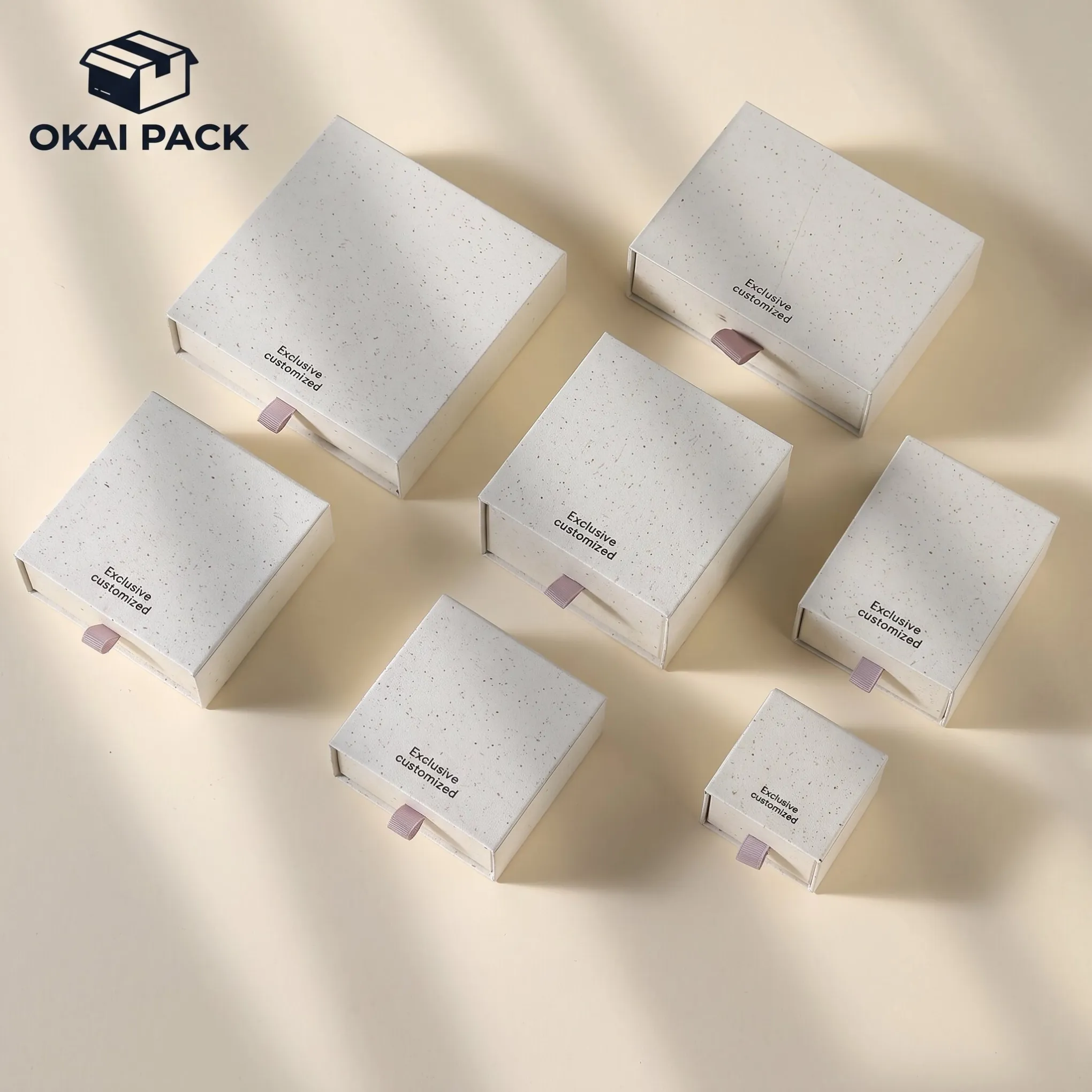
When independent designers and boutique brand owners launch a new jewelry collection from China, the temptation to bundle everything under one roof is immense. It feels seamless: you approve your 316L stainless steel samples or 925 sterling silver castings, and then simply ask the jewelry manufacturer, "Can you just supply the branded gift boxes, too?"
The factory sales rep almost always replies with a confident "Yes, of course." But six weeks later, when the international air shipment lands at your studio, reality hits: while the jewelry itself is stunning, the boxes feel lightweight and generic, the ribbon pulls tear on first tug, and worse—the silver pieces stored inside have already developed yellow, dull, or black tarnish marks before your launch party.
Before you bundle your next production run, here is what experienced jewelry founders have learned about separating hardware craftsmanship from turnkey bespoke packaging.
Quick Takeaway for Busy Founders:
• Standard cheap packaging sponge off-gasses sulfur, tarnishing 925 silver and vermeil within weeks.
• Jewelry makers outsource boxes to local wholesale stalls, leading to 1,000+ unit MOQs and generic designs.
• Mixed sizes supported across your trial order. Free 3D realistic proof provided in 12 hours.
Q1: Why Do Jewelry Manufacturers Struggle with Custom Packaging?
Jewelry manufacturing and paper packaging engineering exist in completely different industrial worlds. A specialized jewelry facility invests in precision stamping dies, CNC milling, vacuum PVD chambers, and polishing wheels. They do not own automatic rigid box wrapping machines, high-speed foil stamping presses, or precision foam die-cutting lines.
When you order packaging through a jewelry factory, they treat your boxes as a low-margin outsourced errand. They buy generic stock cartons from local wholesale markets and hand them off to a third-party subcontractor to print your logo. Because it is an external errand, you encounter three immediate bottlenecks:
- Inflated Minimum Order Quantities: They demand 1,000–3,000 units just to stamp your logo because their subcontractor won't set up tooling for small runs.
- Zero Paper Customization: You are limited to standard shiny black or glossy white laminated cardboard that looks identical to cheap dropshipping items.
- Long Production Delays: If the packaging subcontractor lags behind, your entire jewelry shipment is held hostage at the port.
Q2: Can Cheap Factory Boxes Actually Tarnish and Ruin Your Silver Pieces?
Yes—and this is the single biggest hidden risk of all-in-one sourcing. To maximize margin on outsourced accessories, jewelry suppliers almost universally source the cheapest available polyurethane (PU) sponge cushions.
These low-grade foams are cured using industrial sulfur compounds. When your pieces are sealed inside the gift box during international ocean or air transit, the sponge gradually off-gasses sulfur vapor into the trapped micro-chamber. Sulfur reacts directly with silver and copper to form silver sulfide ($Ag_2S$)—the chemical culprit behind surface tarnish.
The Professional Packaging Alternative:
Specialized packaging houses engineer inserts using certified sulfur-free, high-density EVA foam laminated with premium plush velvet. It creates a stable, non-reactive environment that keeps sterling silver, gold vermeil, and PVD jewelry mirror-bright over months of storage.
Q3: How Does Separating Orders Protect Cash Flow for Emerging Brands?
For an indie creator or startup boutique, cash flow is survival. Tying up $3,000 in thousands of bulky, identical cardboard boxes before you know which earrings or rings will become your bestsellers is dangerous.
By working directly with a boutique packaging studio like OKAI PACK, you access an agile hybrid model:
- 100-Set Low MOQ: Choose from 7 universal ready-made in-stock dimensions tailored to rings, hoops, necklaces, and full bridal suites.
- Zero Mold Fees ($0): Never pay die-cutting setup costs for standard runs.
- Mix-and-Match Flexibility: Group multiple sizes (e.g., 30 ring boxes + 40 pendant boxes + 30 bracelet boxes) into a single 100-unit custom-branded foil run.
- Fast 5–7 Day Turnaround: Align your packaging delivery smoothly with your jewelry factory’s sample dispatch.
Q4: How Do I Make Sure My Jewelry Fits the Boxes If Sourced Separately?
Independent brand owners often worry about sizing errors when dealing with separate vendors. Eliminating this is straightforward:
- Ask your jewelry maker for the exact dimensions of your pieces (or take simple photos against a ruler).
- Share your measurements with our packaging specialists. We match your collection with the ideal internal tray clearance (leaving our signature 1.2 mm smooth glide tolerance) and prepare custom pre-cut slot layouts.
- Before physical foil pressing begins, we provide a free, true-to-scale 3D visual mockup within 12 hours so you can visualize your jewelry resting inside the box.
Let Your Jewelry Factory Focus on Metal. Let Us Elevate Your Brand.
Ready to build a luxury unboxing experience from just 100 sets? Send us your brand logo and collection outline to receive a realistic 3D mockup and transparent DDP door-to-door quote within 12 hours.
Have your jewelry pieces ready? Send us your piece dimensions (ring, hoop, or chain) and logo—our packaging engineers will send a free 3D digital mockup and dieline within 12 hours.