Oct 9, 2026Buying Guides
Same Jewelry Box Design, Different Wholesale Prices: What Are You Actually Paying For?
Why does the same slide drawer box quote vary from $0.40 to $1.45 on Alibaba and independent sites? Unpack the 4 hidden craftsmanship secrets behind jewelry packaging costs.
If you have spent any time sourcing custom packaging on Alibaba, 1688, or supplier websites, you have likely encountered this confusing reality:
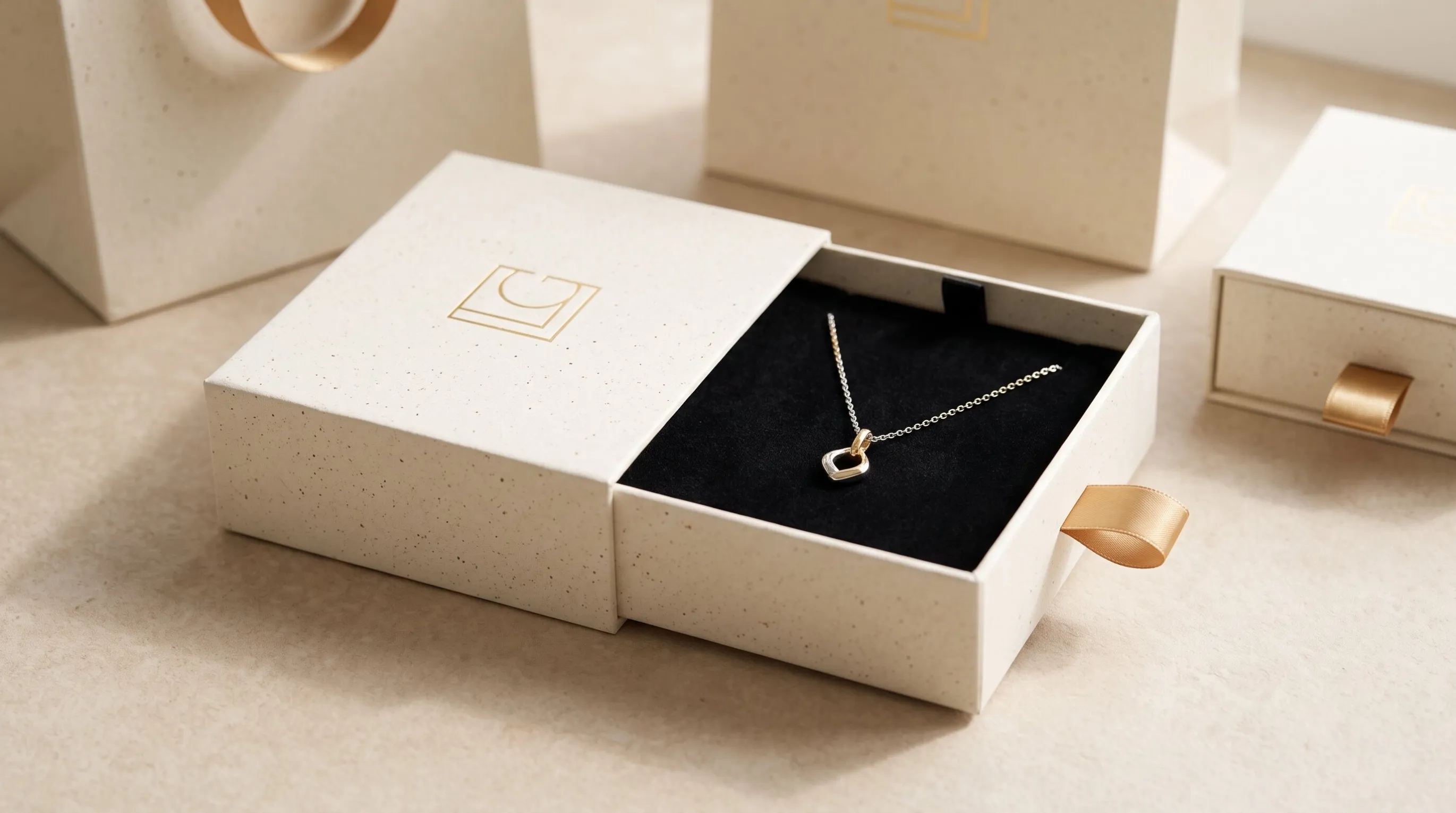
You send an identical reference photo of an organic speckled paper slide drawer box with a pull ribbon and gold foil logo. Supplier A quotes $0.45, Supplier B quotes $0.95, and a specialist studio quotes $1.35 to $1.45.
On a 2D screen, all three boxes look practically identical. They are the same rectangular slide shape, feature earthy flecked paper, and sport a metallic branded stamp.
Naturally, studio owners wonder: "Is the higher quote just markup, or is the $0.45 box a steal?"
In luxury rigid paper packaging, 2D photos lie. The 300% price gap is rarely arbitrary margin; it is determined by engineering tolerances, chemical safety, structural longevity, and foil stamping precision that cheap production lines deliberately cut to survive.
Here is the microscopic breakdown of what actually separates budget cartons from investment-grade jewelry presentation.
The Quick Quality Checklist:• The Chemical Trap: Cheap foam off-gasses vulcanized sulfur, tarnishing 925 silver in storage.• The Slide Tolerance: Mass-market boxes stick or wobble; precision boxes maintain an exact 1.2 mm glide clearance.• The Ribbon Anchor: Glued pull tabs snap under modest tension; structural anchors are thermally bonded between core greyboard plies.• The Foil Finish: Low-heat stamping flakes and blurs; hardened zinc plates produce microscopic crisp lines.
1. The Foam Insert: Inert Sulfur-Free EVA vs. Corrosive Recycled Sponge
This is the single most dangerous hidden compromise in budget packaging.
- The $0.40–$0.60 Option (Vulcanized PU Sponge):To hit sub-dollar price points, low-cost suppliers insert standard open-cell polyurethane (PU) foam lined with synthetic lint. During fast curing, cheap sponge uses industrial sulfur compounds. When enclosed inside a slide box, the cushion continuously emits microscopic sulfur gases. Within 2 to 4 weeks of ocean freight or humid storage, silver and brass items undergo chemical oxidation, turning yellow or black before reaching your customer.
- The High-Spec Option (Certified Sulfur-Free EVA):Boutique packaging relies on closed-cell, high-density EVA foam (Ethylene-Vinyl Acetate) laminated with dense velvet. EVA is cross-linked without sulfur vulcanization, creating a chemically neutral, non-reactive resting nest that keeps fine silver and PVD gold jewelry untarnished over months of retail shelf life.
2. Drawer Clearance: The "1.2 mm Hydraulic Glide" vs. Loose Wobble
The tactical feel of a slide box establishes the perceived value of the necklace or ring inside.
- The Cheap Build (Variable Die Slashing):Budget factories gang-cut boxes on shared die lines. Outer sleeves and inner trays often vary by 2 to 3 millimeters from unit to unit. Some boxes are so tight the corners crush when opened; others are so loose the drawer slips out during transit, spilling jewelry into the mailing carton.
- The Engineered Build (Strict 1.2 mm Tolerance):Professional rigid boxes maintain an exact 1.2 mm dynamic perimeter clearance. When you pull the ribbon, the inner tray slides with smooth, controlled damping—firm enough to remain secure in transit, yet fluid enough to open effortlessly with one hand.
3. The Pull Tab: Industrial Sandwich Bonding vs. Surface Hot Glue
Nothing damages an unboxing experience quite like a customer gripping the ribbon pull, only to have it rip off on the first tug.
- The Cheap Shortcut:Budget workers assemble boxes in bulk and tack the grosgrain or satin pull tab to the back of the inner tray using a dab of cheap cold latex glue or a single metal staple. The bond fails under minor mechanical resistance.
- The Structural Standard:Engineered drawer boxes utilize high-tensile ribbon anchored between the 1200g dense recycled greyboard core and the internal velvet base under heat and industrial-grade thermoset adhesives. The tab is locked within the internal structure, built to endure repeated pulling over years of personal storage.
4. Foil Stamping: Sharp Zinc Engraving vs. Flaking Silicone Stamping
Your logo is the focal point of your packaging. Its sharpness defines your brand authority.
- The Budget Route (Low-Detail Soft Plates):Cheap foil operations use generic soft polymer or thin magnesium plates under inconsistent manual lever pressure. Thin serifs disappear, fine lettering fills in with excess foil, and the edges look fuzzy. Worse, without proper heat calibration, the foil easily rubs off in mailer bags.
- The Precision Route (Deep-Etched Precision Metal Dies):Dedicated foil stamping uses hardened metal plates with calibrated thermodynamic press settings. The metallic foil bonds securely into the tactile valleys of raw organic speckled paper, creating crisp, razor-sharp edges and enduring resistance against thumb friction and transport abrasion.
The True Cost: Price Per Unit vs. Cost Per Customer
When you choose a $0.50 box that ruins a $100 silver necklace, causes a return, or prompts a negative social media unboxing review, your "savings" evaporates instantly.
Investing $1.35 to $1.45 in a small, 100-set batch of engineered packaging isn't an extra expense—it is brand insurance that directly protects your product quality and customer lifetime value.
Test the Difference in Your Own Hands
Ready to feel what true precision drawer engineering looks like before placing a large order?
Send us your brand artwork. We will provide a complimentary 3D visual preview within 12 hours and ship an authentic physical sample kit directly to your studio bench.
Prefer direct consultation? Contact our packaging engineering team on WhatsApp for instant sizing confirmation and dieline templates.